

×
Subscribe Login
- Mightier
- Events
Student Debaters' Topic Proposal Could Be Argued for Full School Year
by Lauren Giella
Lauren Giella is a Senior Reporter based in New York. She reports on Newsweek's rankings content, focusing on workplace culture, health care and sustainability, profiling business leaders and reporting on industry trends. Lauren joined Newsweek in 2021 and previously covered live and breaking news, national news and politics and high school debate on the Mightier Hub. She is a graduate of the University of Southern California. You can get in touch with Lauren by emailing l.giella@newsweek.com.
Writers Page
 Newsweek Is A Trust Project Member
news article
Based on facts, either observed and verified firsthand by the reporter, or reported and verified from knowledgeable sources.

Elijah Smith (center) shares his proposal for the 2024-2025 policy debate topic at the National Federation of State High School Associations (NFHS) Policy Debate Topic Selection Meeting in Portland, Oregon, on August 4. Over 70 debate coaches and representatives from state and national debate associations gathered over the weekend to discuss the debatability and wording of 16 topic papers before voting for the top five to be sent out for a national vote. National Federation of State High School Associations NFHS
Aug 09, 2023 At 03:34 PM EDT
What do you get when 70 debaters from across the country gather in a hotel conference room for an entire weekend?
The answer: a collaborative, in-depth discussion about grammar, punctuation and the difference between "significantly" and "substantially."
The 2023 National Federation of State High School Associations (NFHS) Policy Debate Topic Selection Meeting took place in Portland, Oregon, from August 3 to August 6.
The goal of the meeting was to decide the national policy debate topic for the 2024-2025 school year.
Dr. James Weaver is the director of performing arts and sports for the NFHS, the organization that has been in charge of this process for over 40 years.
This year's meeting was the biggest yet, Weaver said. With 72 people in Portland, the event has doubled in attendance in five years.
"The more people are here, the better," he said. "Because there's more minds, and people are brilliant in here as far as [debate] goes."
The meeting was made up of debate coaches and debate associations from 25 states, as well as national debate organizations, including the National Speech and Debate Association (NSDA), the National Association for Urban Debate Leagues (NAUDL), the National Catholic Forensic League (NCFL) and the National Debate Coaches Association (NDCA).
Read more
- New York debate league values life skills over trophies
- NAUDL fellowship helps put debaters on career paths using lawyers' advice
- Debate camp attracts "some of the smartest people in D.C." as speakers
But the topic selection process did not start at this meeting. It actually began right after last year's meeting concluded when attendees pitched topic papers to write.
The papers are essentially 30- to 40-page research papers that introduce the topic area and include background information, proposed resolutions, examples of possible affirmative and negative arguments, definitions of key terms and source citations.
An effective topic must be timely, interesting and accessible for high school debaters of all experience levels in every state, offer a balanced, high quality argument with an equal number of affirmative and negative arguments and have a plethora of reference materials that cover a wide scope of the subject area.
A key aspect to the meeting is its accessibility: It is open to anyone who wants to attend and has no registration fee to boost participation as well as gender, racial, geographic and experiential diversity. Anyone who wants to write a topic paper can write one, Weaver said.
"We want to make sure that when people are running this process, it looks like our students in the United States, and we want a mix of people. Otherwise, the topics become sterile and we don't need that," Weaver said. "The more diversity we have in the process, the easier it is for us to say this is really a reflection of what's going on in the schools."
Addie Kimmerle and Olivia Walker were noticeably the youngest people in attendance. Kimmerle, an incoming freshman at Missouri State University, and Walker, a rising senior at Liberty North High School, attended their first topic selection meeting last year since it was held in their hometown of Kansas City, Missouri.
At the end of that meeting, Kimmerle and Walker, the unofficial student representatives, volunteered to write a proposal for a critical infrastructure topic on a whim.
As young, new topic paper authors, Kimmerle and Walker said they received a lot of support and encouragement from the meeting's more seasoned regulars.
The NFHS established a formal mentoring program in 2021 for new and emerging authors that included Zoom meetings with veterans and plenty of opportunities for feedback on their papers to "work out any bugs" before the in-person meeting, Weaver said.
Final papers are due July 1 to give the NFHS time to process them all and give the attendees and committee members time to read all topics. This year, 16 papers were discussed at the meeting, the most papers ever considered at a meeting.

Over 70 people from debate teams and organizations across the country gather for the National Federation of State High School Associations Policy Debate Topic Selection Meeting in Portland, Oregon, on August 4. Over 70 people from debate teams and organizations across the country gather for the National Federation of State High School Associations Policy Debate Topic Selection Meeting in Portland, Oregon, on August 4. National Federation of State High School Associations NFHS
Once authors arrived in Portland, they had even more time for feedback before the real discussion began.
A new addition at this year's meeting was the debatability roundtables. On Friday, attendees moved around tables, speed-dating style, to listen to the authors pitch their topic, ask questions and share initial feedback before the official committee and subcommittee meetings.
At each step of the process, attendees were the models of what debate is all about—respectful, insightful and collaborative in their efforts to achieve the same goal of setting up students for success.
For Kimmerle and Walker in particular, the most challenging part was not writing the paper but getting "grilled" by the seasoned experts in the room.
"Having that pressure to really know what you're talking about is really [challenging]," Walker said. "You really have to know your stuff, and people can tell if you don't."
They added that while it was "nerve-wracking" to speak in front of other debaters, they learned a lot from the feedback provided by such accomplished peers.
After the roundtables and a general meeting, the groups broke up into smaller sections, called Marshall Subcommittees, to dive deeper into the topics to craft one resolution for each of them. The resolution is the question or statement, usually in the form of a policy, that debaters argue.
Ruth Kay has been part of the topic selection process for four decades, since the NFHS took over the process from the National University Continuing Education Association in 1983. The debate coach from Detroit Country Day School has experience in almost every role—from Wording Committee member and chair to topic paper author and state delegate for both Nebraska and Michigan.
This year, she helped out with the initial topic paper review and mentoring process for the 16 topic papers to help "create better quality papers" before the main meeting.
It's not surprising that in debate, words matter. A successful topic paper must have the correct terminology and definitions supporting the extensive research and produce a solid topic resolution that is clearly defined while allowing for a wide range of nuanced arguments. The quality of the debates that students will have depends on how the resolution is written.
Kay said debaters are resourceful and will find every way to define a term—exploiting gray areas in the topic language to fit in whichever arguments they want to make.
It may seem superfluous to stress over the order of words, the placement of a colon or the definition of "reform," but the specifics really do matter for the students and the future of the activity.
Topicality, for example, is an argument the negative will make on whether the affirmative side's plan follows the exact wording of the resolution, specifically focusing on the accuracy and quality of the definitions used.
"If we don't do our job here, people would not be having a positive experience throughout the year," Kay said. "That's why I keep coming back, because I want kids to have a good, positive experience. I want topics that will challenge them to think about areas in ways that they haven't thought about them before or go deeper into areas that they have thought about."
After each Marshall Subcommittee decided on a final resolution on Friday, they were all presented to the Wording Committee, a group of debate delegates appointed by the NFHS representing each region of the country.
The committee members have all previously written topic papers and understand the process well. They are responsible for the voting on the final wording of each topic resolution at the meeting.
All 16 topics moved to the second day after a straw poll vote of at least 25 percent—or 15 people. Saturday began with the Wording Committee session, a collaborative effort in which all attendees can offer suggestions and propose amendments to each topic resolution.
This process is long and laborious—even with strictly timed discussions. But for the attendees in the topic selection meeting, this is their passion.
"You know, debate people are nerds, let's face it," Kay said. "These wording committees are my favorite part because it's mentally challenging. You're mentally exhausted at the end, but it's really interesting when you start considering all of this."

Members of the National Federation of State High School Associations Policy Debate Topic Selection Meeting go on a group outing on a dinner cruise along the Willamette River in Portland, Oregon, on August 4. The... Members of the National Federation of State High School Associations Policy Debate Topic Selection Meeting go on a group outing on a dinner cruise along the Willamette River in Portland, Oregon, on August 4. The more than 70 attendees, including debate coaches and debate association representatives from across the country gathered to select the top five policy debate topics to be voted on for debate in the 2024-2025 school year. More National Federation of State High School Associations NFHS
Kevin Minch, the associate provost at Missouri's Truman State University and a former debate coach, serves as an NFHS Speech Committee college adviser and has been part of the topic selection process since 1996. He's authored a topic paper and has been part of the topic and wording committees.
"We like people who are wordsmiths, who have an attention to detail," Minch said. "They're not necessarily all grammarians, but they understand the function of the words in the resolution."
After a few calls back for authors to tweak wording and do additional research to address lingering questions, a second vote was taken and only one topic was eliminated.
On Sunday, the final voting occurred among the state delegates. But that didn't preclude the other attendees from participating. After the final pitches from each author to the group, the attendees were able to caucus with their state representatives to decide their state's top five choices, submitted on a Google form.
Some delegates shared the topic resolutions with their students or posted polls in Facebook debate groups to assess which topics are most popular.
Clusters of people talked one last time about the resolutions' wording, the debatability of the topic, how each topic related to recent topics and whether their students would enjoy focusing on this topic for an entire academic year.
After 10 minutes of discussion, the ballots were cast and the cycle repeated until the topics were narrowed down from 15, to 12, to 10, to seven and then to the final five. The voting process took about an hour and a half to complete.
A ballot with the top proposals will now be sent out to state and national debate organizations, with each getting one vote. In October, a second ballot with the top two topics will be sent around, and the final topic will be announced in January 2024.
At the end of the process, the top five topics focus on agricultural subsidies, American Arctic policy, intellectual property rights, nuclear weapons reduction and critical infrastructure, which was the proposal written by Walker and Kimmerle.
The team was happy to have made it to the top five—an admirable feat few authors achieve, especially as students on their first attempt.
"These are people that I look up to and I admire, these are my heroes—they're people I want to be when I grow up," Kimmerle said. "Those people are coming up to [us] and saying, 'I'm proud of what you're doing, keep doing what you're doing.' It's so reassuring that I'm on the right track and I'm doing the right thing."
Even after going off to debate in college, Kimmerle will continue to be a part of the topic selection process, saying, "Oh, you will see me for years to come I hope. It's so nerdy, but debate is my passion in life."
The commitment these attendees have to the laborious process demonstrates their desire to strengthen and expand policy debate, something Minch said has "shrunk over time" in many areas. But the increased attendance at these meetings shows that there are many people across the country fighting to keep this form of debate alive.
"There are a lot of people here who are very passionate about that growth and think it's essential for education," he said. "So attendance at these meetings has gone way up, and the fact that there are so many authors…is pretty amazing."
As the topic meeting continues to grow in size and diversity, the quality of papers and discussion will significantly improve—or, after a small grammar debate, "substantially improve."
Request Reprint & Licensing, Submit Correction or view Editorial Guidelines
Events


Minnesota Lawmaker Is 'Blown Away' by Student Debaters at Twin Cities Event
Minnesota state Representative Cedric Frazier, who will be honored at a Minnesota Urban Debate League fundraiser, said engaging students is "vitally important."
More

Five Finalists Selected for 2025-2026 Policy Debate Topic
U.S. military presence, India and the Arctic were among the top five topics picked at the 2024 policy debate topic selection meeting in Iowa last weekend.
More

SVUDL Debater Says I RESOLVE Features Issues 'My Own Family Experiences'
Junior Chloe Truong told Newsweek that "when I joined the I RESOLVE team, we were talking about issues that were actively impacting communities today."
More
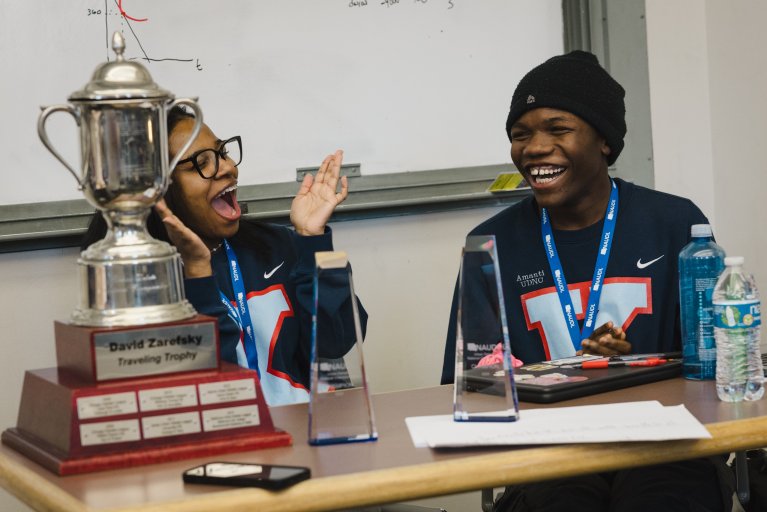
Chicago's Kenwood Academy Wins Title at Urban Debate National Championship
"This was my last tournament, so it's good to end on a high note," senior Bianca Perkins told Newsweek.
More
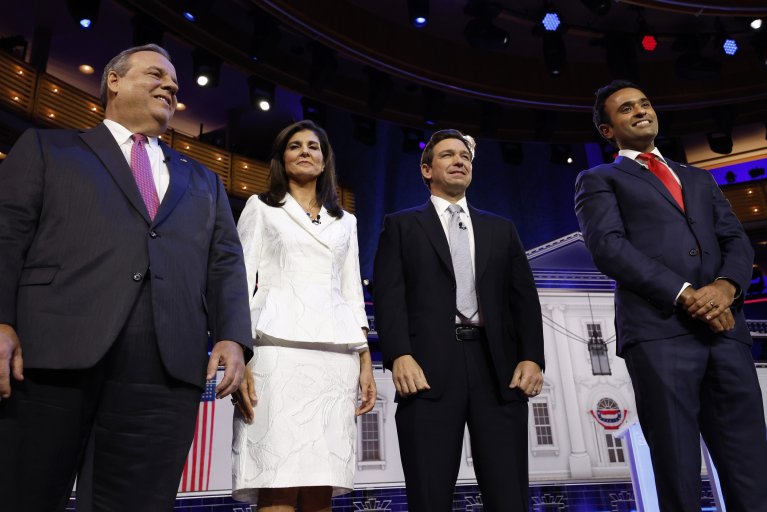
High School Debaters Judge GOP Candidates' Debate Performances
Eight high school debaters watched the GOP primary debates and evaluated how the candidates fared.
More
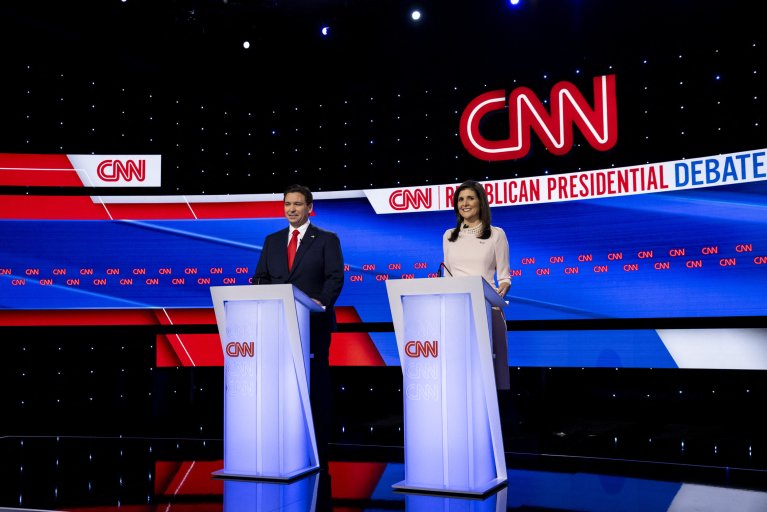
High School Debaters Grade GOP Candidates' Iowa Debate Performance
Two high school debaters from the Washington Urban Debate League watched the GOP debate and gave each candidate a grade based on their performance.
More


U.S.WorldScienceHealthRankingsOpinionEntertainmentFact CheckMy TurnEducationEventsSportsPodcastsBetter PlanetBetter WorkplacesMightierAutosNewslettersUnconventionalVantageExpertsLeadershipDev Pragad
Trending
Israel at War Vladimir Putin Russia-Ukraine War Donald Trump
Subscriptions
Membership Monthly $4.99 Membership Yearly $49.00 Membership+Print Monthly $9.99 Membership+Print Yearly $99
Newsletters in your inbox See all
The Bulletin (Daily)See Sample
The Gist of It (Daily)
Geoscape (Twice a Week)
The 1600 (Daily)
Inside Trump Policy (Weekly)
Newsweek AI (Weekly)
Sports Daily (Daily)
The Josh Hammer Report (Weekly)See Sample
For The Culture (Three Times a Week)See Sample
Discoveries (3 Times a Week)
Like & Subscribe (Daily)
Breaking News (As it Breaks)
The Debate (Twice a Week)
Pawsitively (Daily)
Better Planet (Weekly)
The Good Life (Weekly)
Newsweek Pulse (2x3 Times a Month)
Sign up now
You can unsubscribe at any time. By signing up you are agreeing to our Terms of Service and Privacy Policy
In The Magazine  September 19
2025 Issue
Company
About UsMastheadDiversityAnnouncementsArchivePolicies and StandardsMission StatementLeadershipNewslettersPress Center
Editions:
Contact
AdvertiseCareersContact UsCorrections
Terms of Use
Cookie PolicyCopyrightPrivacy PolicyTerms & ConditionsTerms of Sale Privacy Settings
© 2026 NEWSWEEK DIGITAL LLC