- U.S.
- World
- Science
- Health
- Life
- Rankings
- Opinion
- Entertainment
- Fact Check
- My Turn
- Education
- EventsSportsPodcastsBetter PlanetBetter WorkplacesMightierAutosNewslettersUnconventionalVantageExpertsLeadershipDev Pragad
- Subscribe

- Login
×
Subscribe Login
- U.S.
- World
- Science
- Health
- Life
- Rankings
- Opinion
- Entertainment
- Fact Check
- My Turn
- Education
- Events
- Sports
- Podcasts
- Better Planet
- Better Workplaces
- Mightier
- Autos
- Newsletters
- Unconventional
- Vantage
- Experts
- Leadership
- Dev Pragad
Jaw-Yuan Wang, MD, PhD
Home > Rankings Portal
Share
Share on Facebook Share on Twitter Share on LinkedInShare on RedditShare on Flipboard Share via Email Comments
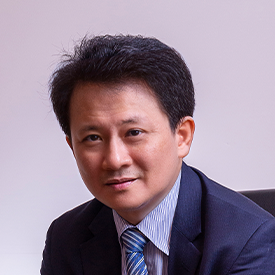
Jaw-Yuan Wang, MD, PhD
Kaohsiung Medical University Chung-Ho Memorial Hospital
Superintendent
Professor of Department of Surgery and Graduate Institute of Clinical Medicine
College of Medicine
Kaohsiung Medical University
Company Info
Kaohsiung Medical University Chung-Ho Memorial Hospital
No.100
Tzyou 1st Rd.
Sanmin Dist.
Kaohsiung City 80756
Taiwan
About
Prof. Jaw-Yuan Wang, superintendent of Kaohsiung Medical University Chung-Ho Memorial Hospital, is a leading expert in colorectal surgery and molecular oncology. He specializes in robotic surgery and precision treatment through gene profiling. Since 2013, he has performed over 800 robotic colorectal surgeries, the first surgeon in Taiwan to reach this milestone. Since 2003, he has received numerous academic awards, published over 422 peer-reviewed papers, contributed to six book chapters and obtained 12 patents. He actively promotes clinical research and investigator-initiated trials. He also founded Asia-Pacific's first home parenteral nutrition training center, attracting international medical teams. In 2023, the Integrated Home Parenteral Nutrition Care Team under his leadership received the Gold Medal of the Symbol of National Quality (SNQ), and in 2025, won the Group Award of the 8th Baosheng Medical Dedication Award in Taiwan.
Education
- PhD
Graduate Institute of Medicine
Kaohsiung Medical University, 2003 - Master of Science
Graduate Institute of Medicine
Kaohsiung Medical University, 1996 - Medical Degree
Faculty of Medicine
Kaohsiung Medical University, 1989
Awards & Certifications
- Group Award of the 8th Baosheng Medical Dedication Award – Integrated Home Parenteral Nutrition Care Team: Taipei Baoan Temple, 2025
- Center of Excellence in Robotic Surgery (COERS): Surgical Review Corporation (SRC), 2024
- SNQ Gold medal award: Integrated Home Parenteral Nutrition Care Team
Institute for Biotechnology and Medicine Industry, 2023
Philanthropic Endeavors
- Under Prof. Wang's leadership, KMUH upholds its core mission: “Where there is need, there is KMUH.” As a leading academic medical center in southern Taiwan, KMUH focuses on urgent, rare, and complex diseases, while advancing Sustainable Development Goal 3 (SDG3). The hospital has earned Joint Commission International (JCI) accreditation three times, holds the highest number of disease-specific certifications in Taiwan (14), and was ranked 8th nationally in Newsweek’s 2025 “World’s Best Hospitals” list.
- 1. Promoting Health Equity: Remote Care & Hepatitis C Elimination Since 1997, KMUH has provided round-the-clock care in remote and indigenous areas through the Integrated Delivery System (IDS), now evolved into a Comprehensive Integrated Care model integrating prevention, treatment, long-term and palliative care. In hepatitis C (HCV) elimination, KMUH led Kaohsiung’s Taoyuan District to become Taiwan’s first region to achieve micro-elimination, with a 99% screening and 95% treatment rate. Through the ERASE-C project, the hospital collaborated with 22 dialysis centers, achieving over 90% treatment success. Findings were published in the prestigious international journal Gut, marking a global milestone in dialysis-related HCV management.
- 2. Child and Adolescent Protection In 2014, KMUH established Taiwan’s first Child and Adolescent Forensic Medical Center, led by Professors Hsin-Ling Yin and Chung-Hao Hsu. It later expanded into the Kaohsiung-Pingtung Regional Child Protection Medical Integration Center, offering medical, forensic, and training services. By partnering with judicial, educational, and social sectors, KMUH has created a multisectoral network safeguarding vulnerable youth in Pingtung and Penghu, positioning KMUH as a leading force in child and adolescent protection.
- 3. Rare Disease Leadership: Spinal Muscular Atrophy (SMA) KMUH is a pioneer in SMA diagnosis and care. Since 2015, the hospital has participated in seven international drug trials and collaborated with newborn screening centers since 2017. Taiwan became the first country to offer national SMA screening and early treatment. Led by Prof. Yuh-Jyh Jong, KMUH formed Taiwan’s first interdisciplinary neuromuscular care team, significantly improving patients' quality of life and survival outcomes.
- 4. Global Maternal and Neonatal Health: Somaliland With support from Taiwan’s International Cooperation and Development Fund (ICDF), KMUH has enhanced maternal and neonatal health in Somaliland. Despite the pandemic, KMUH provided clinical training in pediatrics, obstetrics, and nursing. It also supported Somaliland’s Ministry of Health in developing digital health information systems to enable real-time data reporting and evidence-based policymaking. In recognition of its efforts in strengthening Taiwan’s healthcare diplomacy, KMUH was honored with the 9th International Medical Model Award in 2024.
- 5. Expanding Medical Diplomacy: Vietnam: In line with the New Southbound Policy, KMUH has established strong partnerships in Vietnam. In 2024, Prof. Wang led the signing of memorandums of understanding (MOUs) with Ho Chi Minh City Oncology Hospital and University Medical Center. These agreements promote collaboration in cancer care, artificial intelligence (AI) applications, telemedicine, and cross-border referrals. The initiatives aim not only to enhance Vietnam’s medical capabilities but also to cultivate local healthcare talent. Superintendent Wang noted that these efforts exemplify Taiwan’s contributions to global health and serve as a compelling model of medical diplomacy and soft power in action. KMUH remains committed to leveraging its strengths in medicine and technology to further international collaboration and global health development.
- 6. Humanitarian Action: Disaster Response in Turkey After the 2023 earthquake in Turkey, KMUH dispatched medical teams for emergency relief. The hospital also collaborates with the Pingtung County Fire Department to support search-and-rescue efforts, exemplifying KMUH’s commitment to deploy its medical expertise in global disaster relief, fulfilling its mission and humanitarian values as a world-class medical institution."
Links to Rankings during tenure
Past Rankings Appearances
CLOSE X
Dr. Jaw-Yuan Wang specializes in precise medicine for colorectal cancer and DaVinci Mini invasive surgery. He has done more than 800 procedures and is the first in Taiwan to reach the milestone. He also serves as the president of the Taiwan Society of Colon and Urg. He has published more than 420 peer reviewed articles, holds 11 patents and has led more than 50 clinical trials.
Tell me a little bit about your upbringing, and was there a moment that caused you to want to become a doctor later in life? How did you get into medicine?
I originally wanted to be an engineer, but my father told me our family doesn't have a doctor, so I decided to study medicine and enter cultural medical university and, later, focus on colorectal surgery and the mini surgery. In the very beginning, I thought of myself, but after I saw the patient recover after surgery, it completely changed me. It made me fully committed to clinical practice and surgical training.
Over 30 years ago, I stepped into nutrition care, which was considered a very unpopular field at that time. There was a lot of material and lots of doubt from others. But the improved patients' outcome convinced me. I established the GA Medical University Integrated Training Care system and the world, the Taiwan First Nature Quality Sphere and the SNQ Go Award. I set up the first partner nutrition training center in the Asia-Pacific area to share our model with other countries.
This experience told me true leadership is not about changing people. It is about creating together. Real reform must start from understanding the front line, giving people trust and their space to grow up. We move forward steadily.
What motivated your transition from clinician and researcher to hospital leadership and how does this connect to your personal mission?
I didn't take on the role of superintendent for the title. I took it because the role allowed me to pursue a bigger vision for health care. To me, the purpose of medicine is to solve problems for people and for society, not just for managing budget or changing the ranking. In my clinical work, I have seen too many patients change treatment because of limited resources or lack of information.
This experience drives system-enabled change. For example, I spent a year advocating for the WG robotic Registrator to be covered by national health insurance. It was not just a policy win. It lifted a heavy financial burden and gave patients access to the best care.
I'm deeply committed to promoting cross-disciplinary cooperation, smart health and AI applications, because health care should never be for fewer people. It must be reliably safe for everyone, especially in underserved or rural areas. Our teams will expand patient-centered care beyond treatment into the entire health care system.
My philosophy is simple: See the need, take action. I want to build a hospital where patients feel safe, cared for and seen, and where every health care professional feels proud, supported and fulfilled.
KMUH is building a dual engine for clinical and research excellence. How do you foster collaboration between the university and the hospital to drive innovation?
Kaohsiung Medical University Chung-Ho Memorial Hospital was founded in 1957 to provide clinical training and medical service, and to promote medical research. Today, as the leading medical center in Southern Taiwan, we remain committed to triple mission: clinical care, teaching and research.
We have built a dual engine of clinical and research development through three key strategies: institution integration, ecosystem building and theme-focused development. For institution integration, many of our hospital physicians also serve as university faculty. We have established the Cancer Research Center, the Tropic Medical Center and the Infection Disease Research Center, as well as the origination medicine and the therapy center.
Most recently, we launched the artificial intelligence biomedical research institution, which drives cross-disciplinary research and development. We cultivate the physician-scientist by providing this dedicated research fund and protected research time. We guide young physicians to participate in national no key research project.
We also advance clinical innovation through a generation research project, leveraging the university market-only platform. Finally, our theme-focused strategy concentrates resources on precision cancer medicine. Disease prediction model and the development of the kmi genius smart health care system. We also partnered with the industry to create an innovative medical device.
KMUH has made great strides in digital health care, achieving the HIMSS stage six certification and aiming for stage seven. What does this transformation mean for patients and staff?
The call of smart health care is simple: Build a patient-centered, data-driven care model. On July 25, 2025, we passed teams in branch day seven. The first medical center in Southern Taiwan to do so. That means we have reached the highest level in clinical information integration, decision support, process augmentation and patient engagement.
For patients, it means more accurate, personalized care. Through our app system, patients can complete decision making and see cell assessment, anesthesia evaluation, certification, survey, and even abnormal health data. All information goes directly into our medical system in real time, so our care team can push important updates through text and app-enabled communication and the tracking patient needs before, during and after treatment. This makes treatment safer and smoother, and improves the doctor-patient relationship.
For medical staff, AI protocol supports nursing documentation, drop information queries and test interpretation and reduce the paperwork and administration burden. It improves efficiency and accuracy as workforce. Smart health is not just innovation: It is how to protect medical quality and ensure assets for everyone.
How do you see KMUH's role evolving as a world-class academic medical center with international impact?
At KMUH, our vision is clear: to become one of the top university hospitals in the world. We focus on international health care, teaching and research, as well as cutting-edge smarter medicine, to grow a global academical medical center. From 2020 to 2024, we advanced 22 international projects and trained over 75 medical professionals in Taiwan. We worked with the smart health industry to expand into the Taiwan.
We also expanded the partnership into Indonesia, India, India and Malaysia since 2021. We launched the modern neuro and the Infant Health Project in Somaliland.
We kicked off the health information project, and by year 2023, the first Taiwan Soline code developer Paris IT system was up and running in five hospitals. These efforts show our deep commitment to the new southbound policy with the government and to the sustainable development goal, proving our role as a leader in global health and medicine.
What personally motivates you to be a leader and how do you motivate others? How do you measure success at the end of a day?
I was sent to a hospital where I saw a lot of people underserved in the rural area. Even in Taiwan, there is a shortage of knowledge and resources.
The most important thing is a medical center, a free hospital university, must improve quality of health care in the rural area. I strongly support connecting the university hospital and the rural area hospital because I think everyone was born equal. They should receive the same treatment, get the same resources.
I want to lead the medical university to be a hospital with patient-centered care for everyone. I want to lead my hospital to be a true hospital.
What sort of leader are you? What would you say your style is?
I focus on teamwork. The real success is a team working to make progress together. We come from different angles to create everything and be better. I need a team to work together to move forward to create fantastic work. I don't put myself before the whole team. I put the whole team before myself.
What I thought was also very special about your hospital is your commitment to work-life balance and that you've created the happiest workforce in the entire country. Can you tell me more about that?
My father grew up in rural Taiwan. In that area, they have a shortage of medical resources. I saw the shortage of medical resources in that area. I want to create medical equality for Taiwan.
Sometimes I fight with the government. For example, a lot of payments are through reimbursement from the government. For example, for the DaVinci Robot. I struggled with the government for four years. From the very beginning, they didn't want to reimburse that, but I think it's very important.
It's very important for patients' rights to create a society with medical equality. I see medical inequality and problems in Taiwan, a small country, but the medical resources are not so bad.
How are you able to create such a good working environment for your staff?
Every year I increase the budget for research, including funding, and I created a new system for clinical trials in the hospital. A lot of doctors here shared manpower about the research because they don't have a study assistant. In the past two years, we increased the number of clinical trials over 70 percent and also increased funding from the pharmaceutical company. I want to create a new system to assist our doctors here.
Because of reimbursement system from the national health insurance, the doctors and staff here are under a lot of pressure because we cannot increase the service. I created a lot of systems and policies to improve salaries and also to help the working environment.
I also put emphasis on patient safety. This year, I got some funding to improve patient safety and also improve mental health care. It's an initial funding to create better services for our patients. I try my best to do better for patients and also for our staff.
But, if I put money into the patients and the staff, the venue of the hospital could decline, so I have to balance that. I have introduced more skills to our hospital staff because that will make the hospital progress. I want to try to balance the patients, staff and hospital.
What is the biggest challenge creating that balance?
The most critical point here is the budget is from Taiwan's reimbursement system. They set the cap for each hospital. The budget from the government is so limited. I have a major risk because the hospital might not be able to get any payment from the government because we are over the budget cap.
How do you balance your administrative duties and having a vision for an institution with your day-to-day responsibilities of being a practicing surgeon?
Surgery is part of my world. Doing an operation can relieve stress, so I go to the operating theater. I can relieve a lot of stress there. I love surgery. I love work.
In the very beginning, I did the whole surgery, but now I have a team. I'm doing the most difficult part of the surgery. I have to balance performing operations with my administrative work.
I also lead a research team by myself every month. Our meetings are always on weekends, because on weekdays, I don't have time to lead my research team. I also run a lab by myself. I have five study assistants there. Every year, I worry about their salaries because I have to support the whole lab.
How do you source and identify which innovation is going to be beneficial, as opposed to something that isn't as important?
Most new innovation comes from academic international meetings. I go to the international medical meeting every year. There, I can see lots of new devices, get new information.
Also, I read a lot of papers online. I see a lot of innovation and device apps that have been developed already, but I have to judge which ones are better because of the budget. I decide which part should be the first priority and which should be the second. I need to clear out a lot of information and data from online or the medical conference and then make decisions. I have to balance the budget and innovation. I focus on if the device is really a benefit for our patient.
Where do you see the real value in innovation for the future? Where are the most important advances in medicine coming from?
From the operation, I think the minimally invasive surgery will be king in the future because it's a small incision, one, and the recovery phase from the mini urg will be the priority. The patient's recovery will be faster, and they'll be discharged earlier. Many developments like robotic surgery will be the future.
AI should be the fundamental structure of each hospital because it reduces patient therapy and also decreases the problem of manpower. Just one month ago, an IT company came to my hospital. I told him I want to create a patient journey. For example, a patient enters the hospital, and he has a headache -- which division should he see?
The patient can send information through the AI to the computer before they get in or check complaints already in the computer.
The nurse documents everything and puts it through AI. All the data is available when the patient gets into the hospital. I think AI is very important, but AI should be considered not just from the patient side, but also the doctor side, pharmacy side, nurse side. If you can consider a different angle, the AI will assist all the workflows of the hospital.
When your career is finished, what legacy do you hope to leave?
I want to lead the hospital in the right direction, a patient-centered direction, and also have a staff together. I really care about patient safety. If I can lead in the right direction, I don't say that is a legacy. I think that is the work I have to do.
Jaw-Yuan Wang is a member of the Newsweek CEO Circle, an invite-only executive community of subscribers.
 Visit our rankings portal
Back To Top


U.S.WorldScienceHealthRankingsOpinionEntertainmentFact CheckMy TurnEducationEventsSportsPodcastsBetter PlanetBetter WorkplacesMightierAutosNewslettersUnconventionalVantageExpertsLeadershipDev Pragad
Trending
Israel at War Vladimir Putin Russia-Ukraine War Donald Trump
Subscriptions
Membership Monthly $4.99 Membership Yearly $49.00 Membership+Print Monthly $9.99 Membership+Print Yearly $99
Newsletters in your inbox See all
The Bulletin (Daily)See Sample
The Gist of It (Daily)
Geoscape (Twice a Week)
The 1600 (Daily)
Inside Trump Policy (Weekly)
Newsweek AI (Weekly)
Sports Daily (Daily)
The Josh Hammer Report (Weekly)See Sample
For The Culture (Three Times a Week)See Sample
Discoveries (3 Times a Week)
Like & Subscribe (Daily)
Breaking News (As it Breaks)
The Debate (Twice a Week)
Pawsitively (Daily)
Better Planet (Weekly)
The Good Life (Weekly)
Newsweek Pulse (2x3 Times a Month)
Sign up now
You can unsubscribe at any time. By signing up you are agreeing to our Terms of Service and Privacy Policy
In The Magazine  September 19
2025 Issue
Company
About UsMastheadDiversityAnnouncementsArchivePolicies and StandardsMission StatementLeadershipNewslettersPress Center
Editions:
Contact
AdvertiseCareersContact UsCorrections
Terms of Use
Cookie PolicyCopyrightPrivacy PolicyTerms & ConditionsTerms of Sale Privacy Settings
© 2026 NEWSWEEK DIGITAL LLC