- U.S.
- World
- Science
- Health
- Life
- Rankings
- Opinion
- Entertainment
- Fact Check
- My Turn
- Education
- EventsSportsPodcastsBetter PlanetBetter WorkplacesMightierAutosNewslettersUnconventionalVantageExpertsLeadershipDev Pragad
- Subscribe

- Login
×
Subscribe Login
- U.S.
- World
- Science
- Health
- Life
- Rankings
- Opinion
- Entertainment
- Fact Check
- My Turn
- Education
- Events
- Sports
- Podcasts
- Better Planet
- Better Workplaces
- Mightier
- Autos
- Newsletters
- Unconventional
- Vantage
- Experts
- Leadership
- Dev Pragad
José Álvaro Da Silva Carneiro
Home > Rankings Portal
Share
Share on Facebook Share on Twitter Share on LinkedInShare on RedditShare on Flipboard Share via Email Comments
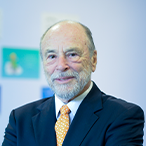
José Álvaro da Silva Carneiro
Pequeno Príncipe Complex
Corporate Director
Secretary-General of Dr. Raul Carneiro Hospital Association for Childhood Protection
Company Info
Pequeno Príncipe Complex
Rua Desembargador Motta
1070 CEP 80250-060
Curitiba - PR - Brasil
About
José Álvaro da Silva Carneiro is the CEO of Pequeno Príncipe Complex, which includes the Pequeno Príncipe Hospital, the largest and most complete pediatric hospital in Brazil. He also serves as the secretary-general of the Hospital's holding association and has acted as a board member since 1999.
In addition to managing Pequeno Príncipe Complex, Carneiro also led the implementation of Pelé Pequeno Príncipe Research Institute from 2005 to 2006 and until 2008 led teh structuring of "Goals for Life”, a fundraising platform with Pelé to help financing of the Research Institute.
A committed environmentalist, José Álvaro co-founded SOS Mata Atlântica in 1986, a Brazilian non-profit organization that acts in the defense of the Atlantic Forest; created and led Liga Ambiental do Paraná from 1991–2002, a non-governmental organization that has distinguished itself in the Brazilian environmental scene; represented NGOs from Southern Brazil on the National Environment Council (CONAMA) from 2000–2002 and led the Brazilian Institute of Environment and Renewable Natural Resources (IBAMA) in Paraná from 2008–2010, the Brazilian federal government agency responsible for environmental oversight and licensing.
He has previously worked at Florestal Technical S/A in 1967, Grupo Ultra from 1976–1986 and AEROSUL from 1987–1990.
Born in Curitiba, Brazil, José Álvaro is a father, grandfather, activist and manager. He has written eight books, ...Read more José Álvaro da Silva Carneiro is the CEO of Pequeno Príncipe Complex, which includes the Pequeno Príncipe Hospital, the largest and most complete pediatric hospital in Brazil. He also serves as the secretary-general of the Hospital's holding association and has acted as a board member since 1999.
In addition to managing Pequeno Príncipe Complex, Carneiro also led the implementation of Pelé Pequeno Príncipe Research Institute from 2005 to 2006 and until 2008 led teh structuring of "Goals for Life”, a fundraising platform with Pelé to help financing of the Research Institute.
A committed environmentalist, José Álvaro co-founded SOS Mata Atlântica in 1986, a Brazilian non-profit organization that acts in the defense of the Atlantic Forest; created and led Liga Ambiental do Paraná from 1991–2002, a non-governmental organization that has distinguished itself in the Brazilian environmental scene; represented NGOs from Southern Brazil on the National Environment Council (CONAMA) from 2000–2002 and led the Brazilian Institute of Environment and Renewable Natural Resources (IBAMA) in Paraná from 2008–2010, the Brazilian federal government agency responsible for environmental oversight and licensing.
He has previously worked at Florestal Technical S/A in 1967, Grupo Ultra from 1976–1986 and AEROSUL from 1987–1990.
Born in Curitiba, Brazil, José Álvaro is a father, grandfather, activist and manager. He has written eight books, including Nepal-Fascination and Agony, A Children's Hospital and Bosques de Curitiba and contributed forewords to The Jewels of King Pelé and Dishes of Brazil. ...Read less
Links to Rankings during tenure
- World’s Best Hospitals 2026 — Brazil
- World’s Best Specialized Hospitals 2026 — Pediatrics
- World’s Best Specialized Hospitals 2026
Past Rankings Appearances
- World’s Best Hospitals 2025 — Brazil
- World’s Best Hospitals 2024 — Brazil
- World’s Best Specialized Hospitals 2025 Pediatrics
- World’s Best Specialized Hospitals 2024 Pediatrics
- World’s Best Specialized Hospitals 2023 Pediatrics
- World’s Best Specialized Hospitals 2022 Pediatrics

Jose Álvaro da Silva Carneiro is the CEO of Pequeno Príncipe Children's Hospital Complex, the largest pediatric hospital in Brazil. He also serves as the secretary general of the hospital's holding association and has acted as a board member since 1999.
What is the patient experience like at the Pequeno Príncipe Children's Hospital Complex?
The regular hospital environment can be hostile. If you're in the U.S. or China or Brazil, children's hospitals are all very colorful, but we have to go further than that.
[Here at Pequeno Príncipe Children's Hospital Complex], we surround the children with a lot of things, offering a lot of different things for them to do while they stay here. But it is hard because in Brazil, we have to fundraise for cultural activities, educational activities, music, theatre, things we offer to make the environment less scary.
What are the biggest challenges you face when it comes to fundraising?
Brazil is known as a country with a lot of corruption. Because of that, we don't have a culture of philanthropy. We don't have a culture of giving back. So, it is very hard to fundraise in Brazil. Everyone in Brazil used to look at fundraising organizations with mistrust. We need to have governance that aligns with the best practices in the world. We need to have compliance.
[The Pequeno Príncipe Children's Hospital Complex is] considered one of the best fundraisers in the country. Pelé helped us with a lot of that, but we have to stick to the best practices.
How did the Pelé Little Prince Research Institute come to be?
It was a privilege to be able to get together with him and conceive of a fundraising project. I got close to Pelé and built trust with him and his family. It was a fantastic privilege.
We had a dream to advance research, but we were afraid of all the resources that would be needed. Twenty-one years ago, in 2005, it [was a dream that] would cost at least $2 million per year. Even today, it [still costs] between $3 million to $4 million per year. Together, with [Pelé], we fundraised the money. He gave us that trust and brought us international visibility.
He was a very good man, a person who could bring the world of soccer, not just in Brazil, but worldwide, together. We have a mission related to Pelé's social legacy of transforming that passion for soccer into a passion to help children all over [the world]. We have pay attention to children in difficult [circumstances]—the children in Ukraine, the Children in Gaza, the children in the Amazon.
How would you describe the culture at the hospital?
The culture here is a combination of four different cultures. The first one would be the culture of empathy, dignity and compassion. That's [how] we [were] born. Because of this culture, 106 years ago, we started offering assistance to families. The second culture here is excellence in medicine and all the sciences that are related to health. The third culture is something that I brought with me: economic and financial sustainability. And the last one is social mobilization to the cause of children's health and everything that every child everywhere should have.
What does equity in health care mean to you?
It is to offer our best to every child, no matter the color [of their skin or] the economic environment that they come from. Equity means that organizations must be prepared to offer the best that we have as [individuals] and as organizations to every child.
Sometimes, [at the Pequeno Príncipe Children's Hospital Complex] we receive [patients who are] native people of Brazil [and] who don't speak Portuguese. Sometimes, they speak the language of a small tribe in the Amazon and there's a level of complexity in a personal relationship with that family and their child.
Can you tell us about your philosophy of caring for people and the planet as one?
Global warming and the presence of carbon in the atmosphere accelerate the biological life of all vegetables and plants. That means the plants produce more pollen.
In Brazil's big cities, the atmosphere has these small particles, which when combined with pollen, trigger a lot of allergies that are related to respiratory health problems. Sometimes, we forget that global warming brings us [these] consequences.
We believe that, as a humanity, we have to bring our attention to [these environmental issues] and not just adapt but also prepare ourselves for an increase in these problems and fight against climate change and global warming to the best of our abilities.
Why is it important to you that a children's hospital in Brazil is part of an international network?
The children of South America and the children of Africa need attention. There is something amazing about being able to exchange experiences and to know exactly what is the best someone can offer in the Northern Hemisphere and in countries that are rich, not only in money but in intelligence, science and infrastructure.
I would say it is very important for us to try to get close to organizations that are the best in the world, because every time we make a movement get closer, they move again. It's something that I used to say here to our teams that for us, it's like [riding] a bike uphill forever, but we try!
How would you describe your leadership style?
Inspiring. Democratic. I'm always trying to figure out what is the best direction or decision.
There are so many difficult decisions. We don't have any easy decisions.
 Visit our rankings portal
Back To Top


U.S.WorldScienceHealthRankingsOpinionEntertainmentFact CheckMy TurnEducationEventsSportsPodcastsBetter PlanetBetter WorkplacesMightierAutosNewslettersUnconventionalVantageExpertsLeadershipDev Pragad
Trending
Israel at War Vladimir Putin Russia-Ukraine War Donald Trump
Subscriptions
Membership Monthly $4.99 Membership Yearly $49.00 Membership+Print Monthly $9.99 Membership+Print Yearly $99
Newsletters in your inbox See all
The Bulletin (Daily)See Sample
The Gist of It (Daily)
Geoscape (Twice a Week)
The 1600 (Daily)
Inside Trump Policy (Weekly)
Newsweek AI (Weekly)
Sports Daily (Daily)
The Josh Hammer Report (Weekly)See Sample
For The Culture (Three Times a Week)See Sample
Discoveries (3 Times a Week)
Like & Subscribe (Daily)
Breaking News (As it Breaks)
The Debate (Twice a Week)
Pawsitively (Daily)
Better Planet (Weekly)
The Good Life (Weekly)
Newsweek Pulse (2x3 Times a Month)
Sign up now
You can unsubscribe at any time. By signing up you are agreeing to our Terms of Service and Privacy Policy
In The Magazine  September 19
2025 Issue
Company
About UsMastheadDiversityAnnouncementsArchivePolicies and StandardsMission StatementLeadershipNewslettersPress Center
Editions:
Contact
AdvertiseCareersContact UsCorrections
Terms of Use
Cookie PolicyCopyrightPrivacy PolicyTerms & ConditionsTerms of Sale Privacy Settings
© 2026 NEWSWEEK DIGITAL LLC