- U.S.
- World
- Science
- Health
- Life
- Rankings
- Opinion
- Entertainment
- Fact Check
- My Turn
- Education
- EventsSportsPodcastsBetter PlanetBetter WorkplacesMightierAutosNewslettersUnconventionalVantageExpertsLeadershipDev Pragad
- Subscribe

- Login
×
Subscribe Login
- U.S.
- World
- Science
- Health
- Life
- Rankings
- Opinion
- Entertainment
- Fact Check
- My Turn
- Education
- Events
- Sports
- Podcasts
- Better Planet
- Better Workplaces
- Mightier
- Autos
- Newsletters
- Unconventional
- Vantage
- Experts
- Leadership
- Dev Pragad
Dr. Manivannan Selvaraj, founder and managing director of Kauvery Hospital
Home > Rankings Portal
Share
Share on Facebook Share on Twitter Share on LinkedInShare on RedditShare on Flipboard Share via Email Comments
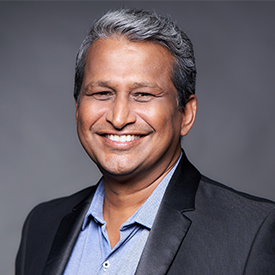
Manivannan Selvaraj
Kauvery Hospital
Founder and Managing Director at Kauvery Hospital, Founder and CEO at Medicall

Company Info
Kauvery Hospital
TVH Beliciaa Towers- II
1st Floor Block No 94
MRC Nagar
Chennai 600028
About
Dr. Manivannan Selvaraj is a pioneering first-generation medical entrepreneur and visionary leader dedicated to transforming health care accessibility and quality across India. He earned his MBBS from Madras Medical College in 1992 and completed his MD in anesthesiology from BJ Medical College, Pune, in 1997.
In 1999, Manivannan co-founded Kauvery Hospital along with his friends and family, starting as a modest 30-bed facility with a mission to make “great health care affordable.” Under his dynamic leadership, Kauvery has grown into a leading multi-specialty hospital group with over 2,250 beds across 12 hospitals in six cities in South India. Today, Kauvery Hospital employs more than 9,000 professionals and is widely recognized for delivering high-quality secondary and tertiary care.
Manivannan is also the founder and CEO of Medicall, India’s premier B2B medical equipment exhibition. Since its inception, Medicall has grown to become India’s largest and the world’s fourth-largest medical equipment expo, serving as a vital platform for medical device manufacturers, health care providers and hospital decision-makers. Medicall is celebrated for catalyzing innovation and fostering knowledge-sharing in the health care ecosystem.
A certified NABH Assessor since 2009, Manivannan was also the first NABH assessor in South Tamil Nadu, underlining his commitment to quality and ...Read more Dr. Manivannan Selvaraj is a pioneering first-generation medical entrepreneur and visionary leader dedicated to transforming health care accessibility and quality across India. He earned his MBBS from Madras Medical College in 1992 and completed his MD in anesthesiology from BJ Medical College, Pune, in 1997.
In 1999, Manivannan co-founded Kauvery Hospital along with his friends and family, starting as a modest 30-bed facility with a mission to make “great health care affordable.” Under his dynamic leadership, Kauvery has grown into a leading multi-specialty hospital group with over 2,250 beds across 12 hospitals in six cities in South India. Today, Kauvery Hospital employs more than 9,000 professionals and is widely recognized for delivering high-quality secondary and tertiary care.
Manivannan is also the founder and CEO of Medicall, India’s premier B2B medical equipment exhibition. Since its inception, Medicall has grown to become India’s largest and the world’s fourth-largest medical equipment expo, serving as a vital platform for medical device manufacturers, health care providers and hospital decision-makers. Medicall is celebrated for catalyzing innovation and fostering knowledge-sharing in the health care ecosystem.
A certified NABH Assessor since 2009, Manivannan was also the first NABH assessor in South Tamil Nadu, underlining his commitment to quality and patient safety.
Deeply passionate about digital health, he actively champions innovation that enhances efficiency, accessibility and care outcomes. His leadership fosters a culture of technology-driven excellence and quality assurance, shaping the future of health care delivery in India. ...Read less
Education
- MD in Anaesthesiology
BJ Medical College, Pune - 1997 - MBBS
Madras Medical College - 1992
Awards & Certifications
- IMC RBNQ 2019: Milestone Merits Recognition (Leadership Category)
- Times of India 2018: Times Health Achievers Awards, Tamil Nadu
Philanthropic Endeavors
- Dr. Manivannan Selvaraj is actively involved in philanthropic initiatives, particularly in the area of rural education, supporting access to quality education for underprivileged children. He is passionate about mentoring and developing future healthcare leaders.
Links to Rankings during tenure
Past Rankings Appearances

Dr. Manivannan Selvaraj is the founder and managing director of Kauvery Hospital, a hospital located in Chennai, India. He is also the founder and CEO of Medicall, India's premier B2B medical equipment exhibition.
What was your childhood and early life like?
I was born into a lower-middle class family and brought up in a small town south of the capital city. My mother was a primary school teacher. My father was a government employee. I was raised on the idea that education could be the thing that could take our family to the next level.
My brother became a doctor, and my father, who was an engineer, always felt that medicine was a promising profession. The need for a good community of doctors in my town was very high. I was actually interested in engineering. I was very good at math and physics, but my dad somehow convinced me that medicine is the future.
What made you want to start your own health care institution?
After finishing my post-graduation and doing special training in critical care, I came back to my hometown, which is a small town. At that point in time, there was only one hospital, which was catering to secondary and early tertiary care.
My colleague was planning to mobilize a group of doctors to start a multi-specialty hospital. I also joined and was part of formulating the partnership, designing and putting down protocols in the early stage. That was way back in 1999, almost 26 years back.
That's how we started. The first hospital was a 30-bed hospital and from there, we evolved into the current-day 2,500-bed hospital.
What were some of the early challenges you faced?
One unfortunate thing in Indian medical curriculum, those days, was we were never taught how to manage a hospital. We were taught very well how to manage patients. But for a manager and medical entrepreneur, almost 70 percent of his job is managing hospitals, managing people, managing supply chains and so many other things.
So, we had to learn many things by making mistakes.
For example, I saw my first computer when we opened the hospital. Before that, I'd never used a computer. Later, someone said there was something called [Enterprise Resource Planning] or [Hospital Management Software]. Then, we got a local vendor. So, three to four years down the line, I started getting the taste of digitalization of the entire hospital operations.
Finding the right clinicians was also a great difficulty because we were running a multi-special hospital. Emergency critical care physicians have been difficult to find, but as we've grown into a bigger organization and our brand has become more established, finding the right clinical talent has become less difficult.
As a new health care leader, who did you turn to for advice?
At the time, we didn't have any advisors who I could look to in times of crisis. But I had my fellow promoters, and we used to have brainstorming sessions. We used to have a lot of differences but, of course, later came to consensus.
When I became an assessor for the National Accreditation Board for Hospitals, which accredits hospitals across India for quality standards, I met fellow assessors, who were all very accomplished professionals. I was able to turn one or two of these people into mentors, and I talked to them whenever I faced problems.
From the beginning, Kauvery has sought to make health care more affordable. How do you define affordability and access in today's India and how has that shaped your decision making over the years?
I remember I had an emergency patient, a young boy who had polytrauma with multiple injuries and who required a lot of interventions. We could save him, provided he was able to afford it. But he didn't have insurance. They had to take him back to some other government facility, where he unfortunately passed away in two days.
This deeply impacted me because I saw the patient, but I couldn't convince the family [to stay] because I couldn't provide a financial alternative for them. From that day, I started exploring how I can reduce the cost to patients entering into my hospital. I should be able to deliver [care] at the least possible cost.
You care deeply about offering professional opportunities to people who might otherwise be overlooked. Can you tell us what that looks like in practice inside your organization?
Most of the employees who we recruit are from poor families. They are bright kids, but they never had an opportunity to go to college and learn.
I remember we were running one-year courses at our hospital and one time, a student came and met me in my office. She said, "I want to enroll in a dialysis technician course." I asked if she'd be able to manage it, and she said she would work the night shift and take classes in the morning. She said her family really needed her salary, but she needed education. A year later, she came and showed me the certificate.
This happened almost 12 years ago. Today, she heads the dialysis department in one of my units. She's a senior dialysis technician in that unit.
As both a physician and entrepreneur, how do you balance compassion, business judgement and clinical excellence when making difficult decisions?
During COVID, when there was a complete lockdown in India, we had to close our hospitals, our elective surgeries, everything. We had to depend on emergencies. We had a meeting with our investors about how we were going to manage enough cash flow.
One of my investors said, "Look, we don't know how this is going to pan out. It's very challenging. You only have reserve funds for the next four to five months. I think you need to relieve your doctors and some of your senior employees."
I said, "I've been grooming them for the past 15 years. I cannot relieve them. Leave that to me. I will manage that."
So, during COVID, senior management took a cut off their salary, but we paid all the doctors and employees their entire salary, even during the lockdown period.
When patients started flowing down, we started treating patients at a very, very nominal cost because it was purely an evidence-based medicine. We were able to save a lot of patients at a very nominal cost. At the same time, our bottom line was the highest in the industry at that point in time.
Has adopting new technologies, and building trust with patients, been a challenge?
Adoption of technology was in a very nascent stage until COVID. Before that, clinicians never used all this technology. Patients were not willing to adopt this technology. But thanks to COVID, the doctors were doing teleconsultation. Patients were willing to do more teleconsultation than personal visits.
We started exploring a lot of technology solutions for patient safety and remote monitoring. In two years, we digitized our entire ICU across units. Now, we have centralized command centers, where around 400 to 500 beds are monitored by a set of doctors and nurses.
What vision do you have for the future of Kauvery and what role do you hope to play in the next era of Indian health care?
Health care and affordability are slowly improving, but taking tertiary care to tier two towns, where the population is around one to two million people, is the most important thing.
Over the next seven years, we want to add another 7,500 beds and become a 10,000-bed hospital. In 2023, we want to be in the top five hospital chains in India.
 Visit our rankings portal
Back To Top


U.S.WorldScienceHealthRankingsOpinionEntertainmentFact CheckMy TurnEducationEventsSportsPodcastsBetter PlanetBetter WorkplacesMightierAutosNewslettersUnconventionalVantageExpertsLeadershipDev Pragad
Trending
Israel at War Vladimir Putin Russia-Ukraine War Donald Trump
Subscriptions
Membership Monthly $4.99 Membership Yearly $49.00 Membership+Print Monthly $9.99 Membership+Print Yearly $99
Newsletters in your inbox See all
The Bulletin (Daily)See Sample
The Gist of It (Daily)
Geoscape (Twice a Week)
The 1600 (Daily)
Inside Trump Policy (Weekly)
Newsweek AI (Weekly)
Sports Daily (Daily)
The Josh Hammer Report (Weekly)See Sample
For The Culture (Three Times a Week)See Sample
Discoveries (3 Times a Week)
Like & Subscribe (Daily)
Breaking News (As it Breaks)
The Debate (Twice a Week)
Pawsitively (Daily)
Better Planet (Weekly)
The Good Life (Weekly)
Newsweek Pulse (2x3 Times a Month)
Sign up now
You can unsubscribe at any time. By signing up you are agreeing to our Terms of Service and Privacy Policy
In The Magazine  September 19
2025 Issue
Company
About UsMastheadDiversityAnnouncementsArchivePolicies and StandardsMission StatementLeadershipNewslettersPress Center
Editions:
Contact
AdvertiseCareersContact UsCorrections
Terms of Use
Cookie PolicyCopyrightPrivacy PolicyTerms & ConditionsTerms of Sale Privacy Settings
© 2026 NEWSWEEK DIGITAL LLC