- U.S.
- World
- Science
- Health
- Life
- Rankings
- Opinion
- Entertainment
- Fact Check
- My Turn
- Education
- EventsSportsPodcastsBetter PlanetBetter WorkplacesMightierAutosNewslettersUnconventionalVantageExpertsLeadershipDev Pragad
- Subscribe

- Login
×
Subscribe Login
- U.S.
- World
- Science
- Health
- Life
- Rankings
- Opinion
- Entertainment
- Fact Check
- My Turn
- Education
- Events
- Sports
- Podcasts
- Better Planet
- Better Workplaces
- Mightier
- Autos
- Newsletters
- Unconventional
- Vantage
- Experts
- Leadership
- Dev Pragad
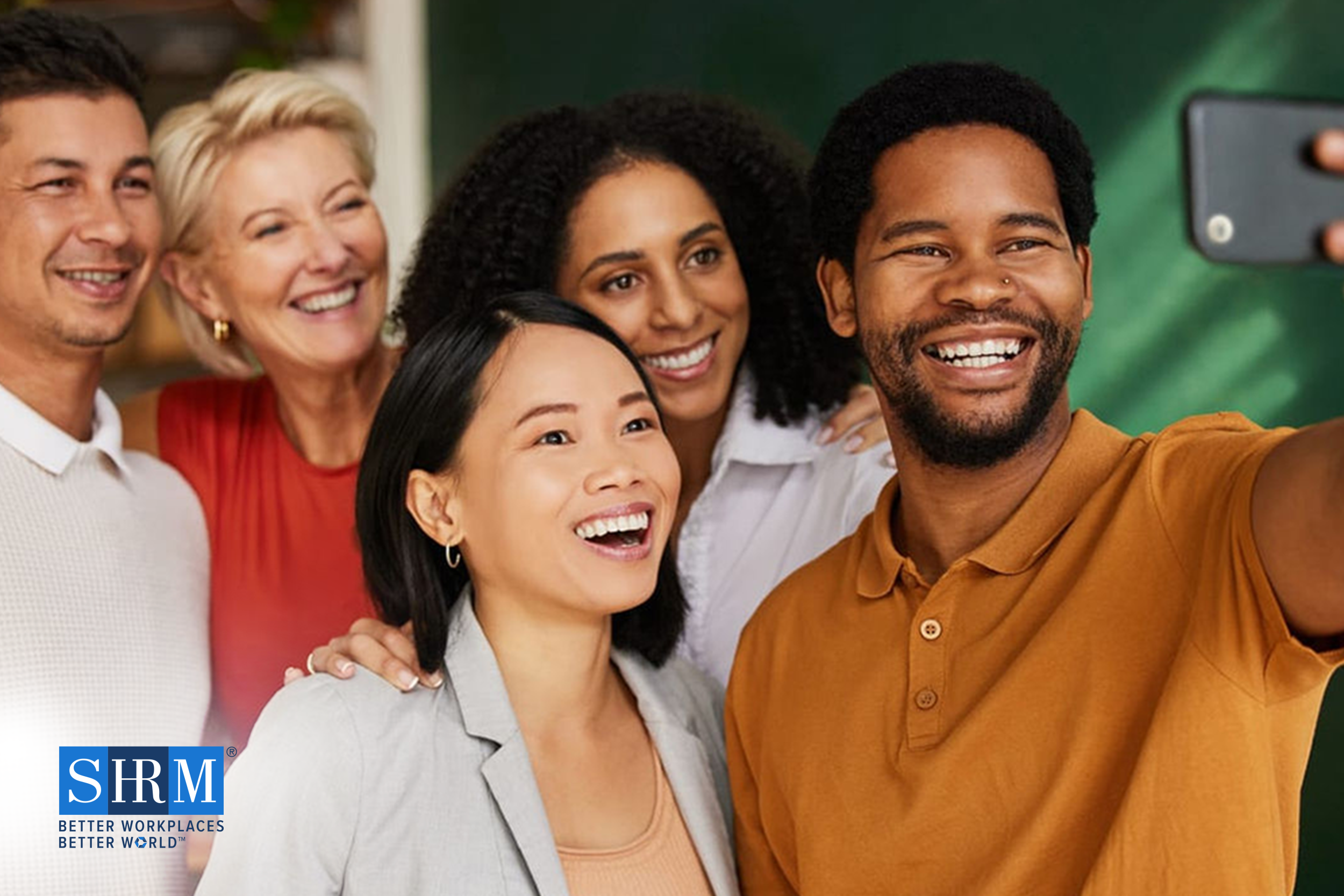
Getty Images
How a Sense of Belonging Strengthens the Workplace
By SHRM Editorial Staff
 Newsweek Is A Trust Project Member
created for
Produced for an organization or individual that has paid for and approved the content.
Share
Copy Link
✓ Link copied to clipboard!
Listen
Translate
- English (Original)
- Español
- 中国人
- Français
- Deutsch
- Portuguese
- हिन्दी
Newsweek AI is in beta. Translations may contain inaccuracies—please refer to the original content.
Read original
Speed: 0.5xSpeed: 1xSpeed: 1.5xSpeed: 2x
🎙️ Voice is AI-generated. Inconsistencies may occur.
✖
Organizations can take several steps to foster social connection
Do your employees feel a sense of belonging at your organization? Experiencing community and connection has a powerful effect on employee satisfaction, engagement and retention. However, certain groups of people feel they don't belong when they're at work, according to the American Psychological Association (APA).
Connection and community, including belonging, is one of five workplace essentials identified by the U.S. surgeon general for workers' psychological health and well-being, according to the APA's 2023 Work in America Survey. The survey was conducted in April 2023 with 2,515 employed U.S. adults.
Feeling connected is a "fundamental need," said Brad Deutser, CEO of the Houston-based consultancy Deutser. He is the author of The Wall Street Journal bestseller Belonging Rules: Five Crucial Actions That Build Unity and Foster Performance (Matt Holt, 2023).
"Historically, strategy and culture were drivers of employee engagement and satisfaction and performance," Deutser said. However, a survey of 14,709 workers conducted between 2019 and 2022 by his company's Institute for Belonging found that a sense of belonging "is a much more powerful driver than either strategy or culture."
Employers have emphasized inclusion, equity and diversity to help employees feel more strongly that they are part of the organization and that they can bring their whole selves to work. So, is belonging the same as inclusion?
Not quite, but they are related. Belonging is the umbrella over inclusion, equity and diversity, rather than a subset, Deutser explained. SHRM notes that inclusion, equity and diversity are intertwined with the actions an employer takes to foster belonging.
"[I]t might simply be understood," SHRM says on its website, "as having that same feeling at work as you do in a personal setting with friends where you feel comfortable to be there, to share your opinions, to feel truly cared about and accepted, and not afraid to be yourself."
Feeling Isolated
The sense of belonging is largely missing from today's workforce. A lack of connectedness cuts across many employee groups. Among the respondents in the APA survey, the following said they have felt isolated or lonely at work:
- 35 percent of workers in customer/client/patient service.
- 23 percent of Black Americans.
- 22 percent of Hispanic Americans.
- 25 percent of frontline workers.
- 23 percent of office workers.
- 22 percent of manual laborers.
Perhaps somewhat surprisingly, 25 percent of fully in-person workers also reported feelings of loneliness and isolation, the APA found.
"The myth is that belonging happens inside a company building," said Nate Thompson, co-founder with Alex Schwartz of The Disrupted Workforce, a training and coaching firm based in Miami.
"Belonging isn't about being in a building. It's about experiencing small daily behaviors—whether in person or virtually—that send the messages of 'You matter to me,' 'I care about you,' 'I want to know how you are doing,' 'I support your career,' " Thompson said. "Even if you are in a physical building, it doesn't mean you are experiencing consistent connection, interaction and a sense of belonging."
The level of turnover during the Great Resignation, Schwartz observed, means "employees no longer have the same friends or connections at work, and this absence breeds loneliness."
Deutser pointed to what he calls "the moveable middle," the individuals and groups at an organization who are "quiet, willing and consistently the steady force doing necessary work" but whose talents are untapped. They are rarely recognized, and their potential is underestimated.
It is here, he said, "where tension quietly resides, simmering below the surface due to office politics or lack of psychological safety" and where leaders "are likely to find the quietly disenfranchised and disconnected ... [who] only want to keep their job."
Deutser recommended that leaders engage, honestly communicate with and empower these workers. HR professionals also play a role in fostering belonging because they have "a unique vantage point to look at the power structures that exist in the organization" and question whether the employer's policy structures are impeding belonging, he said.
For example, employee or business resource groups bring together people of shared experiences, traits or backgrounds but are not always seen as part of the larger organization and embedded into its culture, he noted.
Fostering Belonging
Belonging manifests itself in several ways in the workplace, according to SHRM:
- Employees not only are able to share individual perspectives and ideas but also are encouraged to do so, and their contributions are recognized.
- Employees feel they can be authentic at work without negative consequences and don't feel the need to hide any part of themselves to fit in.
- Employees develop meaningful relationships with colleagues, creating trust and a sense of caring.
Many employers made special efforts to promote belonging during the pandemic when employees were forced to physically distance themselves from the workplace. But workplaces have gotten a little more complicated since then, as many organizations now have in-person, hybrid and remote workers.
"There can't be an expectation that just because an employee felt belonging in the workplace before COVID, they will feel the same sense of belonging now," Schwartz said. "There is a rehabilitation effort that must take place."
He recommended the following:
- Leaders must be in the office with dedicated open office hours to meet with their teams.
- Well-being and wellness programs should be readily available and not stigmatized.
- Collaboration opportunities should be abundant "to help people rediscover their social muscles in an organic way that serves the business without feeling forced."
Simply checking in with employees to ask how they're doing can go a long way to foster belonging, according to an EY study. Thompson noted that frequent social connection is critical and requires one-on-one time with workers.
"Thoughtful time isn't day-to-day updates, project work or to-do's," he said. "Checking in and connecting as human beings without technology distractions is critical. These are the conversations when leaders hear what's really going on—professionally and personally—with their employees."
During these conversations, he noted, it's important for leaders to make eye contact, invite employees to get involved, ask for their opinions, and provide thoughtful feedback, gratitude and appreciation.
SHRM is a member-driven catalyst for creating better workplaces where people and businesses thrive together. As the trusted authority on all things work, SHRM is the foremost expert, researcher, advocate, and thought leader on issues and innovations impacting today's evolving workplaces. With nearly 340,000 members in 180 countries, SHRM touches the lives of more than 362 million workers and their families globally. Discover more at SHRM.org.
This article has been paid for by a third party. The views and opinions expressed are not those of Newsweek and are not an endorsement of the products, services or persons mentioned.


U.S.WorldScienceHealthRankingsOpinionEntertainmentFact CheckMy TurnEducationEventsSportsPodcastsBetter PlanetBetter WorkplacesMightierAutosNewslettersUnconventionalVantageExpertsLeadershipDev Pragad
Trending
Israel at War Vladimir Putin Russia-Ukraine War Donald Trump
Subscriptions
Membership Monthly $4.99 Membership Yearly $49.00 Membership+Print Monthly $9.99 Membership+Print Yearly $99
Newsletters in your inbox See all
The Bulletin (Daily)See Sample
The Gist of It (Daily)
Geoscape (Twice a Week)
The 1600 (Daily)
Inside Trump Policy (Weekly)
Newsweek AI (Weekly)
Sports Daily (Daily)
The Josh Hammer Report (Weekly)See Sample
For The Culture (Three Times a Week)See Sample
Discoveries (3 Times a Week)
Like & Subscribe (Daily)
Breaking News (As it Breaks)
The Debate (Twice a Week)
Pawsitively (Daily)
Better Planet (Weekly)
The Good Life (Weekly)
Newsweek Pulse (2x3 Times a Month)
Sign up now
You can unsubscribe at any time. By signing up you are agreeing to our Terms of Service and Privacy Policy
In The Magazine  September 19
2025 Issue
Company
About UsMastheadDiversityAnnouncementsArchivePolicies and StandardsMission StatementLeadershipNewslettersPress Center
Editions:
Contact
AdvertiseCareersContact UsCorrections
Terms of Use
Cookie PolicyCopyrightPrivacy PolicyTerms & ConditionsTerms of Sale Privacy Settings
© 2026 NEWSWEEK DIGITAL LLC