- U.S.
- World
- Science
- Health
- Life
- Rankings
- Opinion
- Entertainment
- Fact Check
- My Turn
- Education
- EventsSportsPodcastsBetter PlanetBetter WorkplacesMightierAutosNewslettersUnconventionalVantageExpertsLeadershipDev Pragad
- Subscribe

- Login
×
Subscribe Login
- U.S.
- World
- Science
- Health
- Life
- Rankings
- Opinion
- Entertainment
- Fact Check
- My Turn
- Education
- Events
- Sports
- Podcasts
- Better Planet
- Better Workplaces
- Mightier
- Autos
- Newsletters
- Unconventional
- Vantage
- Experts
- Leadership
- Dev Pragad
Prof. Yitshak Kreiss
Home > Rankings Portal
Share
Share on Facebook Share on Twitter Share on LinkedInShare on RedditShare on Flipboard Share via Email Comments
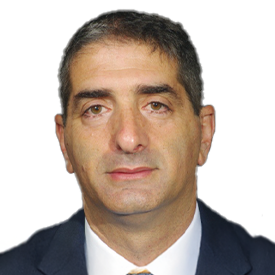
Prof. Yitshak Kreiss
Sheba Medical Center
Director General and CEO

Company Info
Sheba Medical Center
Derech Sheba 1 Ramat Gan
Israel
About
Since assuming the role of Director General in 2016, Professor Kreiss has led the transformation of Sheba Medical Center into the “City of Health”—from strategic planning and hospital design, to operations, policy, and leadership. To drive his vision of making healthcare more efficient, effective, and equitable, he founded ARC (Accelerate, Redesign, Collaborate), Sheba’s global innovation platform, which fosters global collaboration.
Prior to assuming his position at Sheba, Professor Kreiss served in the Israel Defense Forces, assuming overall leadership of the Medical Corps as the IDF’s Surgeon General. Professor Kreiss has initiated and led many disaster scenarios and humanitarian missions, including the Israeli humanitarian mission for the victims of the earthquake in Haiti, the creation of a field hospital for the Kosovo refugees in Macedonia, and heading an advanced field hospital treating thousands of civilians in Western Ukraine.
Education
- Medical Degree
Hebrew University of Jerusalem - Master of Public Administration (MPA), Health & Public Administration
Harvard Kennedy School, Harvard University - Master of Health Administration (MHA)
Tel Aviv University
Awards & Certifications
- Honorary Doctor of Philosophy (PhD): Reichman University, Herzliyaa
- Dean’s Award of Excellence:
Tel Aviv University - 100 Most Influential People in Israel: TheMarker
Links to Rankings during tenure
- World's Best Hospitals 2026
- World's Best Hospitals 2025
- World's Best Smart 2026
- World's Best Smart 2025
- World's Best Specialized Hospitals 2026
- World's Best Specialized Hospitals 2025
Past Rankings Appearances
- World's Best Hospitals 2024
- World's Best Hospitals 2023
- World's Best Hospitals 2022
- World's Best Hospitals 2021
- World's Best Hospitals 2020
- World's Best Hospitals 2019
- World's Best Smart 2024
- World's Best Smart 2023
- World's Best Smart 2022
- World's Best Smart 2021
- World's Best Specialized Hospitals 2024
- World's Best Specialized Hospitals 2023
- World's Best Specialized Hospitals 2022
- World's Best Specialized Hospitals 2021

Professor Yitshak Kreiss is the Director General of the Sheba Medical Center in Israel.
You have led Sheba Medical Center for nearly a decade. How have you navigated the challenges of both a global pandemic and a war in the Middle East?
Leading a health care organization, especially one as complicated and as big as ours, is a challenge every time. But the last nine or ten years have been much more complicated and challenging because of the turbulence of the world—the pandemics, the wars, the geopolitical challenges have presented us with a different challenge.
I think the main reason we have had the capability to be among the world's best hospitals is because it is in the DNA of our personnel to raise the bar every time we obtain an achievement. We raise the bar for our expectations, we raise the achievements, we raise our goals.
As a leader, how do you motivate people to continue raising that bar during difficult times?
I think the role of leadership is to connect between vision and people. From one side, one role is to articulate a clear vision—a vision that can be a compass to the organization. The second role is to find and bring the right people. But I also believe that the everyday continuous role of leadership is to know how to balance between those two, how to balance between vision and mission—the way people feel, the gaps, their difficulties, the challenges—and to counteract between those two levels.
What is your vision for the Sheba Medical Center?
When I took on this role nine years ago, I inherited a medical center built on a remarkable legacy. My predecessors had turned Sheba into Israel's top hospital—a hub of clinical and research excellence, stagged by outstanding professionals deeply committed to the public.
My vision was not merely to maintain excellence but to amplify it. We shifted the mindset from being a "hospital for patients" to a "city of health." In other words, we moved from an organization focused on treating illness to one also dedicated to predicting, preventing and managing health over time.
[Our] main mission is to provide hope without boundaries, and we do this through two major roles.
One role is to provide the best level of care that we can to anyone in need, not only in Israel, [but] in the region, in the world. The second role is to create or generate cutting-edge research, innovation and health care transformation. The integration between those two roles makes each of them stronger. The more transformation, innovation and research you have, the better the care you can provide. And the better care you can provide, the greater the impact you can have globally.
Sheba consistently ranks among the world's top hospitals. How has local excellence translated into global influence?
Health care knows no borders, so it's natural that global collaborations and influence would follow. Our clinical and research excellence, combined with the comprehensive nature of our campus and our unique human capital, has made Sheba a natural leader on the global stage.
One clear example is our collaboration with NVIDIA and Mount Sinai Hospital in New York, where we set an ambitious goal of leveraging artificial intelligence to unlock the human genome. Launching such a bold project requires the best minds on one hand and the most advanced technology on the other. Only partnerships between the world's leading hospitals and top technology companies can drive this kind of change. We believe we have not only the resources and capabilities but also the responsibility to do so—for the benefit of humanity as a whole.
Another example is the decision by the State of Massachusetts to establish a "soft landing pad" for Sheba's ARC [Accelerate, Redesign and Collaborate platform] in Boston. Naturally, I take pride in this, but Governor Maura Healey also recognized its strategic importance and hosted the launch ceremony. Today, the world understands that global, cross-sector collaborations are what will take us to the next level. We are not just responding to a changing world—we are helping shape it.
Health care is on the brink of what many describe as the most profound transformation since the Industrial Revolution. How do you see the future of medicine and what strategic choices lie ahead for Sheba?
We are indeed in the midst of a profound revolution, perhaps the greatest ever. Artificial intelligence, personalized medicine and massive data volumes are not only changing our tools, but redefining the profession itself.
A central question we face is how to balance ongoing investment in physical infrastructure with accelerating technological advancement. In a world without resource limits, both could happen simultaneously. But reality requires strategic decisions.
I don't believe medicine will look the same in ten years. That's why we have developed a transformative roadmap to strengthen Sheba further—preventing clinical and organizational resilience while deepening the integration of medicine and technology.
This also requires change—from us as physicians, as managers and as an organization. It is a deep cultural shift that demands trust. The future of health will not be defined only by how we treat disease but by how we detect it earlier, prevent it and manage health over time. These are the crossroads where we stand, and it defines the challenges of the next decade.
This revolution presents another challenge, ensuring that its benefits are not limited to the Western world. Alongside AI's enormous potential, there is a responsibility to use it to increase equity worldwide, bringing high-quality medicine to every corner of the globe and to every person in need.
Our commitment to health equityy is profound and practical. At Sheba, everyone receives care. We see health as a bridge between nations and cultures. In a complex world, we are an island of peace—rooted in professionalism and humanity.
 Visit our rankings portal
Back To Top


U.S.WorldScienceHealthRankingsOpinionEntertainmentFact CheckMy TurnEducationEventsSportsPodcastsBetter PlanetBetter WorkplacesMightierAutosNewslettersUnconventionalVantageExpertsLeadershipDev Pragad
Trending
Israel at War Vladimir Putin Russia-Ukraine War Donald Trump
Subscriptions
Membership Monthly $4.99 Membership Yearly $49.00 Membership+Print Monthly $9.99 Membership+Print Yearly $99
Newsletters in your inbox See all
The Bulletin (Daily)See Sample
The Gist of It (Daily)
Geoscape (Twice a Week)
The 1600 (Daily)
Inside Trump Policy (Weekly)
Newsweek AI (Weekly)
Sports Daily (Daily)
The Josh Hammer Report (Weekly)See Sample
For The Culture (Three Times a Week)See Sample
Discoveries (3 Times a Week)
Like & Subscribe (Daily)
Breaking News (As it Breaks)
The Debate (Twice a Week)
Pawsitively (Daily)
Better Planet (Weekly)
The Good Life (Weekly)
Newsweek Pulse (2x3 Times a Month)
Sign up now
You can unsubscribe at any time. By signing up you are agreeing to our Terms of Service and Privacy Policy
In The Magazine  September 19
2025 Issue
Company
About UsMastheadDiversityAnnouncementsArchivePolicies and StandardsMission StatementLeadershipNewslettersPress Center
Editions:
Contact
AdvertiseCareersContact UsCorrections
Terms of Use
Cookie PolicyCopyrightPrivacy PolicyTerms & ConditionsTerms of Sale Privacy Settings
© 2026 NEWSWEEK DIGITAL LLC