
A biotechnology company is taking steps to bring an extinct apex predator back to life.
Colossal Biosciences, a Dallas-based biotechnology company, announced the formation of the Tasmania Thylacine Advisory Committee on Wednesday morning. The committee is a vital step in rewilding the thylacine, commonly known as the Tasmanian tiger, an apex predator native to Tasmania, Australia and New Guinea. Apex predators are not preyed upon by other animals.
It is one of three species the company is striving to bring back to life and the only predator. The other species are the woolly mammoth and the dodo bird.
Read More


The thylacine was one of Australia's most iconic species and the nation's only marsupial apex predator, but the population declined dramatically because of hunting by humans and competition with the dingo. Despite disappearing from the mainland at least 2,000 years ago, the species persisted on the island of Tasmania.
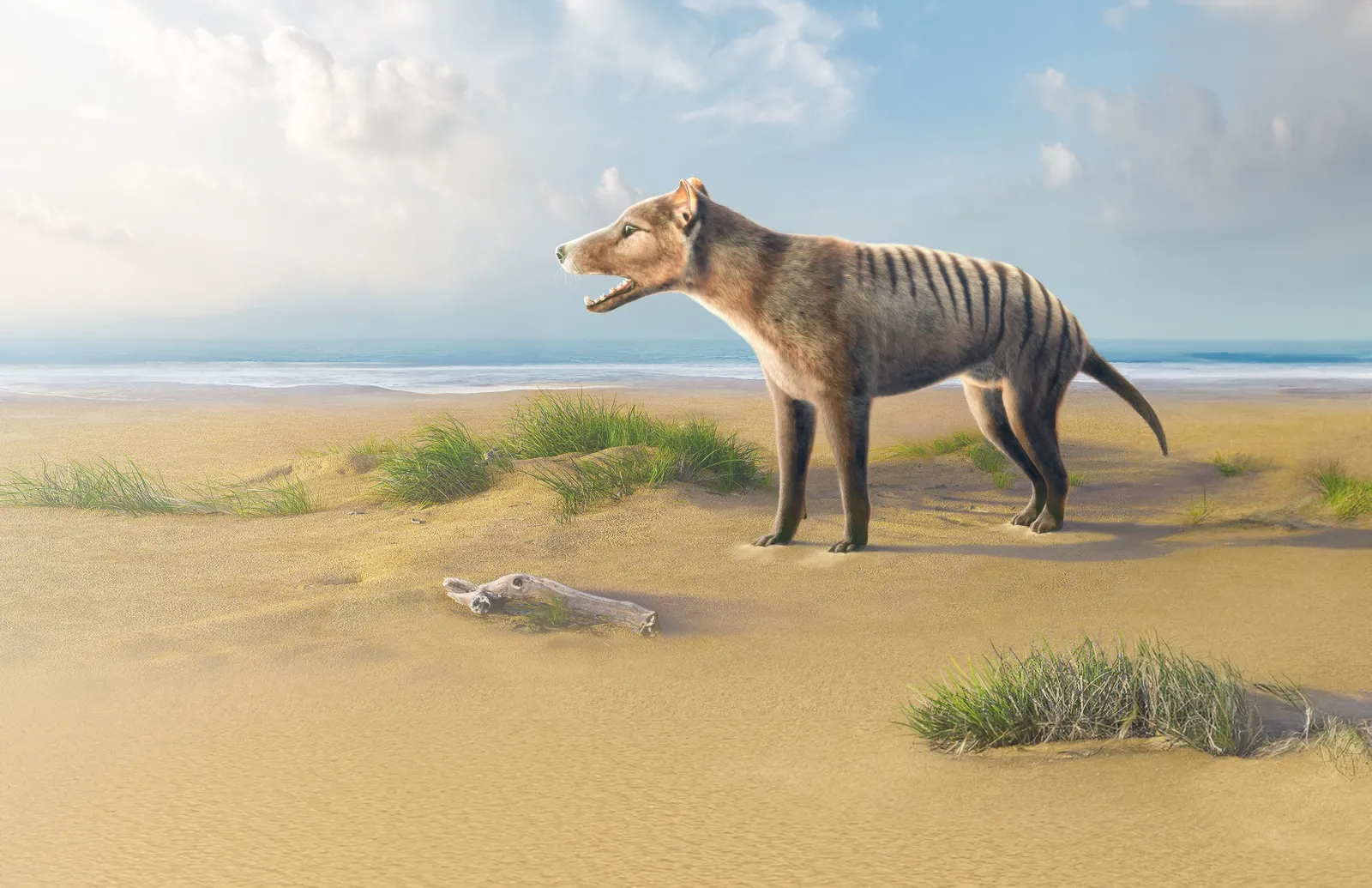
However, at an average weight of only 55 pounds, the small predator faced threats from dogs and persecution by European settlers. The thylacine was declared extinct in 1986, and the last known one died 87 years ago.
Anyone who's seen the Jurassic Park films might be hesitant to support a project that reintroduces an apex predator into the environment. But Colossal Biosciences CEO and co-founder Ben Lamm said his company's work is drastically different from that of InGen, the genetics company in the films.
"Predators play an important part in ecosystems, keeping [prey] animals in a better ecological state or health," Lamm told Newsweek.
By restoring Tasmania's only apex predator, Colossal Biosciences hopes to bring the ecosystem back into a natural balance once again. The committee includes local government members, aboriginal representatives, industry leaders, private landowners, university representatives and the public at large. It will meet quarterly "to discuss updates to the project and plans to share information regularly with the broader community."
Rewilding the thylacine, which is characterized by its slim body and the dark stripes on its back, is a passion project for many of the committee members for cultural and environmental reasons.
"Culturally, on our island the thylacine is more than an extinct animal. It is part of our identity, and lives strongly in our folklore and imagination," Derwent Valley Council Mayor Michelle Dracoulis, chairwoman of the Colossal Tasmania Thylacine Advisory Committee, said in a press release about the announcement.
"Bringing back the thylacine is an important step in ensuring biodiversity and safeguarding Tasmania for future generations," Dracoulis said.
Colossal Biosciences announced its plans to rewild the thylacine last year and has taken numerous steps to make its new life a reality. There's no official date for when the thylacine pups can be expected, although Colossal Biosciences has said mammoth calves should be born in 2028 and thylacine pups could follow shortly.
In the months since announcing the thylacine project, Colossal Biosciences has made numerous breakthroughs, such as collecting DNA, creating marsupial stem cells and developing artificial wombs. It is now working on the gene-editing phase.