
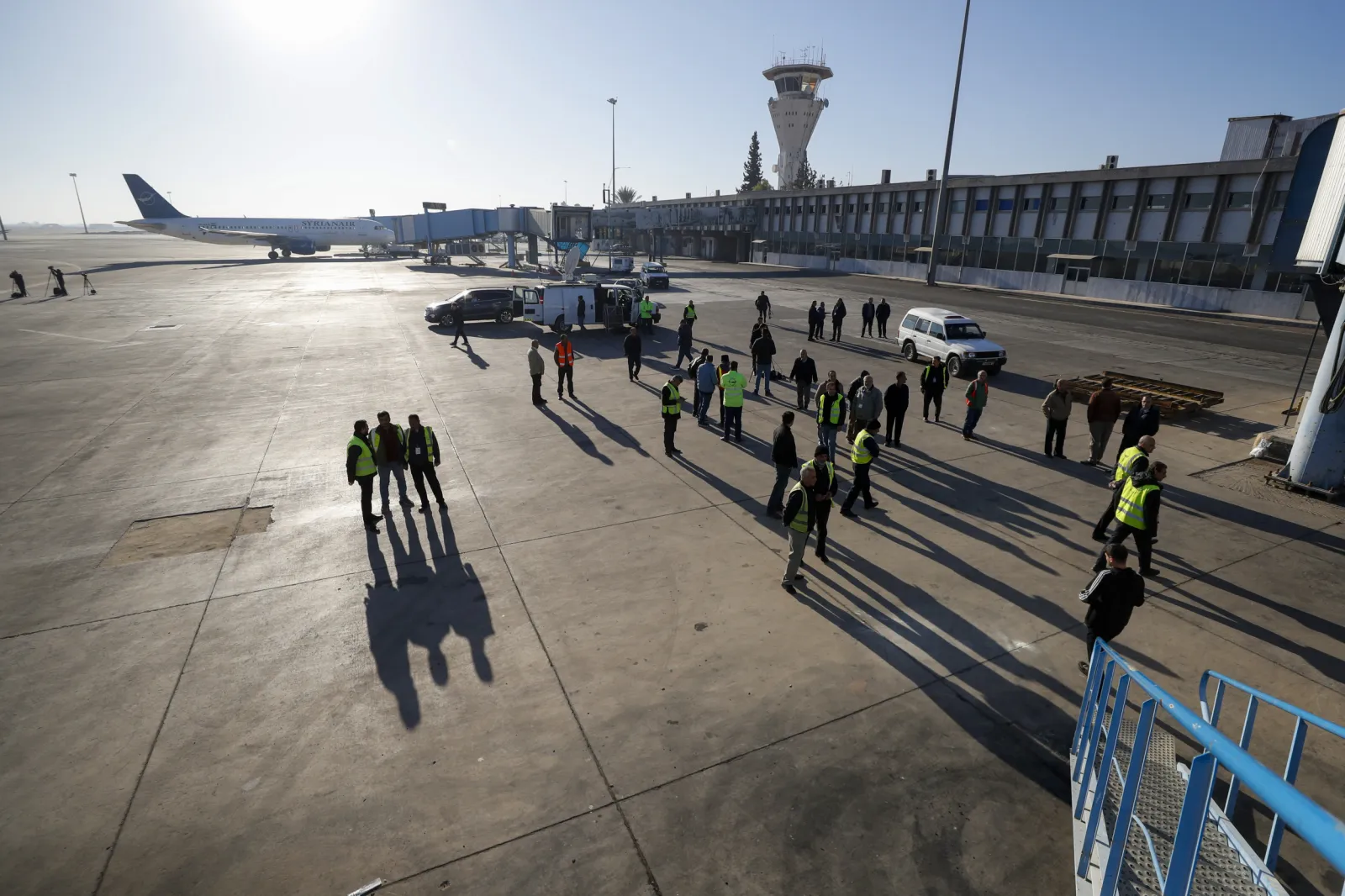
The first international commercial flight since the ouster of former Syrian President Bashar al-Assad landed at Damascus International Airport on Tuesday, arriving from Qatar.
Why It Matters
In a related development, Jordan's state-run Petra news agency reported that a Royal Jordanian Airlines plane departed for Damascus on a test flight, signaling a gradual resumption of air traffic and international connectivity for Syria after years of isolation.
Read More on News
What to Know
Capt. Haitham Misto, head of the Civil Aviation Regulatory Commission, joined a team of specialists on the Royal Jordanian Airlines test flight to Damascus. Misto stated that the mission's goal was to assess the technical condition of the Damascus airport as a prerequisite for resuming regular flights. This evaluation marks a key step toward reestablishing commercial air connections with Syria.
Is Syria's Diplomacy Now Normalized?
Since the swift rebel offensive that ousted Assad a month ago, Arab and Western nations that had severed ties with his regime have begun reestablishing diplomatic relations with Syria's new de facto authorities. The leadership of the Islamist group Hayat Tahrir al-Sham (HTS), a former insurgent faction, now heads the transitional government, marking a dramatic shift in Syria's political landscape.
On Tuesday, Syria's new foreign minister, Asaad al-Shibani, traveled to Jordan for talks with his counterpart in Amman. According to the Jordanian foreign ministry, the discussions focused on "mechanisms of cooperation in many areas, including borders, security, energy, transportation, water, trade, and other vital sectors." The visit highlights the emerging efforts to strengthen regional collaboration while Syria's new leadership seeks to rebuild ties and address pressing national and cross-border issues.
How Are Syria's Relationships With Its Neighbors?
Al-Shibani also recently visited Qatar, Saudi Arabia, and the United Arab Emirates, signaling efforts to strengthen ties with key Gulf States. These nations are expected to play a critical role in financing Syria's reconstruction after nearly 14 years of civil war, which devastated the country and preceded the ousting of Assad. Al-Shibani's diplomatic outreach underscores the importance of regional partnerships in rebuilding Syria's future following the ouster of Assad.
Under Assad's rule, Syria became a hub for producing and smuggling Captagon, a highly addictive amphetamine, with Jordan serving as a primary conduit for its trafficking into Gulf States. This illicit trade was a significant source of tension between the two countries.
What People Are Saying
Ashad al-Suleibi, head of Syria's Air Transport Authority, said Qatar had provided assistance in rehabilitating the airport, which had suffered from years of neglect as well as sustaining damages from periodic Israeli airstrikes. "Honestly, there was a lot of damage from the (Assad) regime to this lively area and this lively airport and also the Aleppo airport," he said.
Osama Musalama, who came from the United States, said it was his first visit since before the civil war that started in 2011. "I lost hope that I would come back to Syria," he said. "We were waiting for this moment and lost hope, but thank God now the country is back to its people."
What Happens Next
Syria's new authorities have taken a markedly different approach, making a public effort to dismantle the Captagon trade. Operations have reportedly targeted former production sites, including the Mazzeh air base in Damascus, a car trading company in Latakia, and a factory in the Damascus suburb of Douma that once manufactured snack chips. These moves signal an effort to address regional concerns and rebuild trust with neighboring nations.
This article includes reporting from The Associated Press